Renovating in Stellenbosch: Navigating Heritage Permits & Modern Design
Stellenbosch is more than just a town; it is a living museum. From the iconic thatched gables of the Cape Dutch era to the intricate fretwork of Victorian villas in Mostertsdrift, the architectural fabric of the Winelands is our greatest asset. However, for homeowners in the “Eikestad,” owning a piece of history often comes with a significant side of anxiety regarding renovations.
The fear of “red tape” or the dread of a “stop-work order” from Heritage Western Cape often prevents owners from making the vital upgrades their homes need. At RDB Home Solutions, we believe that heritage preservation and modern luxury are not mutually exclusive.
This guide demystifies the process of heritage renovations in Stellenbosch, helping you transition from a historic house to a modern home without losing the soul of the property.
1. The “60-Year Rule”: Why Your House is Probably Protected
One of the most common misconceptions we encounter is the belief that a house is only “heritage” if it has a bronze plaque on the wall. In South Africa, the law is far broader.
Under Section 34 of the National Heritage Resources Act (NHRA), no person may alter or demolish any structure which is older than 60 years without a permit issued by the relevant provincial heritage resources authority—in our case, Heritage Western Cape (HWC).
Whether you live in a 1920s bungalow in Somerset West or a 1950s modernist home in Stellenbosch, if the original structure was built six decades ago, you are legally required to go through the heritage application process before swinging a sledgehammer.
2. Understanding the Grading System
Not every old building is treated equally. When you apply for heritage permits in the Western Cape, your property will be assessed and “graded” based on its cultural and architectural significance.
- Grade IIIA (High Significance): These are buildings of excellent architectural or historical quality. Usually, both the interior and exterior must be preserved with meticulous care.
- Grade IIIB (Medium Significance): These properties contribute significantly to the “streetscape.” While the exterior facade is usually protected, there is often more flexibility for internal modernisation.
- Grade IIIC (Low/Contextual Significance): These buildings might not be remarkable on their own but are important because they “fit in” with the historic neighborhood. Renovations here are generally easier to approve, provided the scale and style remain sympathetic to the area.
Heritage Compliance Checklist:
- [ ] Determine the age of the structure (check title deeds or municipal records).
- [ ] Check the “Grading” of your property via the Stellenbosch Heritage Foundation.
- [ ] Appoint a heritage consultant for properties Grade IIIB and higher.
- [ ] Submit a “Section 34” application to Heritage Western Cape.
- [ ] Obtain HWC approval before seeking municipal building plan approval.
3. Navigating the Approval Bodies
Renovating in the Winelands requires dancing with two primary partners:
- The Stellenbosch Heritage Foundation (SHF): While they don’t issue the final permits, the SHF acts as an advisory body to the municipality. They ensure that new designs respect the town’s unique aesthetic. Engaging with them early in the design phase is the best way to avoid rejection later.
- Heritage Western Cape (HWC): Based in Cape Town, this is the statutory body that issues the actual permit. Their committees meet monthly to review applications.
At RDB Home Solutions, we manage this timeline for our clients, ensuring that the programme of works accounts for the 2–4 month lead time often required for these approvals.4. Modernizing History: The Balancing Act
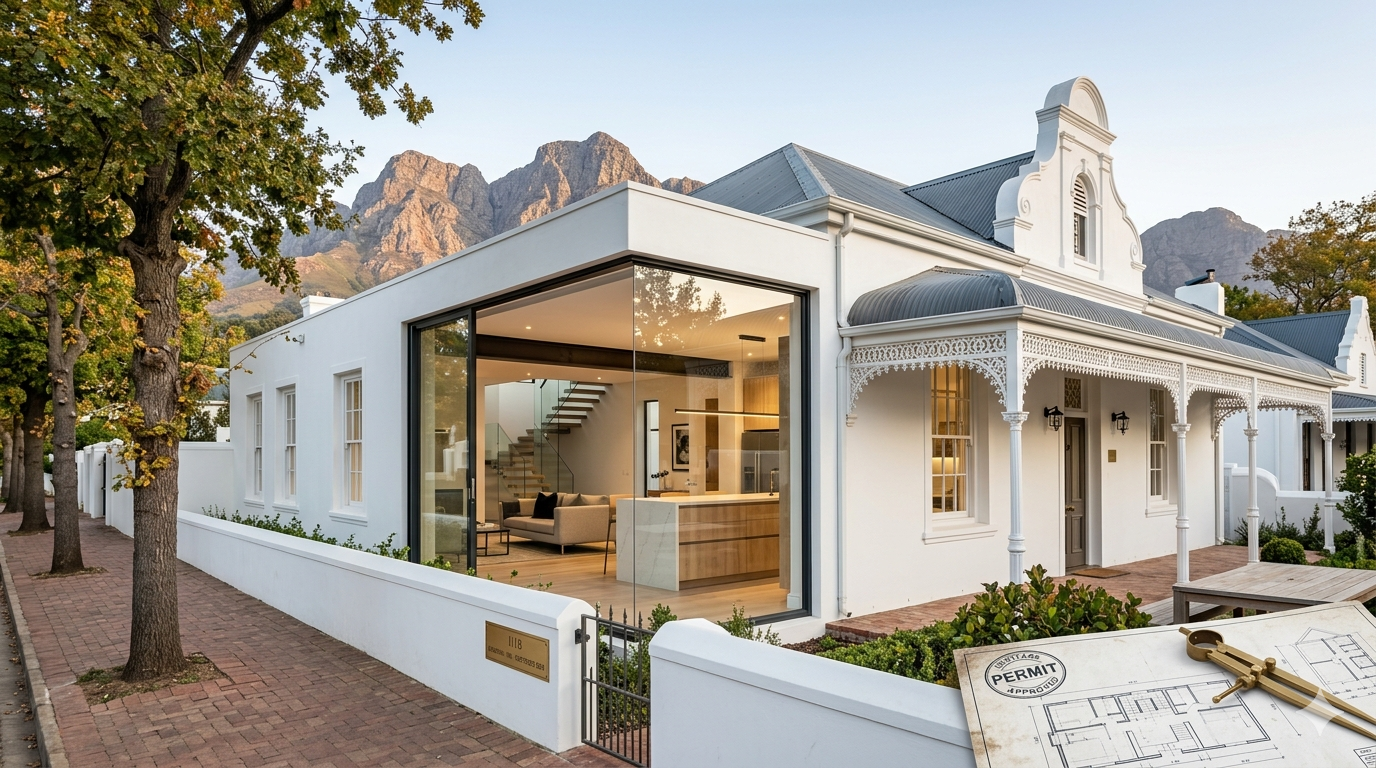
The goal of a successful Stellenbosch heritage renovation is “Invisible Integration.” How do you add the comforts of 2026 to a house built in 1926?
Open-Plan Living
Historic homes were often “compartmentalised” into small, dark rooms. While HWC may resist the removal of original load-bearing walls in Grade IIIA homes, they are often open to “transitional” spaces. We use structural steel hidden within historic volumes to create the flow modern families crave.
Solar & Energy Efficiency
Load-shedding remains a reality, but an array of blue solar panels on a Cape Dutch roof is often a heritage “no-go.” We specialise in sensitive solar placement—utilizing flat-roof sections, outbuildings, or ground-mounted arrays that provide power without compromising the historic silhouette.
Double-Glazing & Windows
Restoring original sash windows is a craft. Rather than replacing them with modern aluminium, we often recommend professional restoration of the timber frames combined with high-performance acoustic and thermal seals. If replacement is necessary, we ensure the profiles match the historic “sightlines” exactly.
5. Common Myths vs. Reality
Myth: “I can’t change anything inside my house because it’s heritage.”
Reality: In many Grade IIIC and IIIB homes, HWC is primarily concerned with the exterior and how the building affects the public street. Internal modernisation—like new kitchens and bathrooms—is frequently approved.
Myth: “Heritage consultants are a waste of money.”
Reality: A heritage consultant is your best advocate. They speak the language of the committees and can often find a “middle ground” that gets your plans passed months faster than if you tried to do it yourself.
Myth: “I can just do the work and ask for forgiveness later.”
Reality: This is a dangerous and expensive gamble. HWC has the power to issue “reinstatement orders,” forcing you to tear down your new work and rebuild the original at your own cost.The RDB Advantage: Craftsmanship Meets Compliance
Restoring historic homes in Stellenbosch requires a different set of tools and a different mindset. You cannot apply modern “quick-fix” methods to a 100-year-old wall.
- Lime Plaster Expertise: Old walls need to “breathe.” Using modern cement on historic brickwork leads to rising damp and structural decay. We use traditional lime-based mortars and plasters where required.
- Specialist Sub-Contractors: From master carpenters for sash windows to specialists in Victorian tiling, we have a vetted network of artisans who respect the heritage of your home.
- Project Management: We bridge the gap between the heritage architect, the engineers, and the site crew. We ensure that the conditions of your permit are met to the letter, protecting you from legal risk.
Take the First Step Toward Your Dream Home
Renovating old houses in Stellenbosch doesn’t have to be a nightmare of bureaucracy. With the right team, it is an opportunity to add immense value to your property while preserving the legacy of the Winelands.
Ready to start? Contact RDB Home Solutions today to schedule a Heritage Feasibility Study. We will walk through your property, assess its age and potential grading, and give you a realistic roadmap for your renovation.