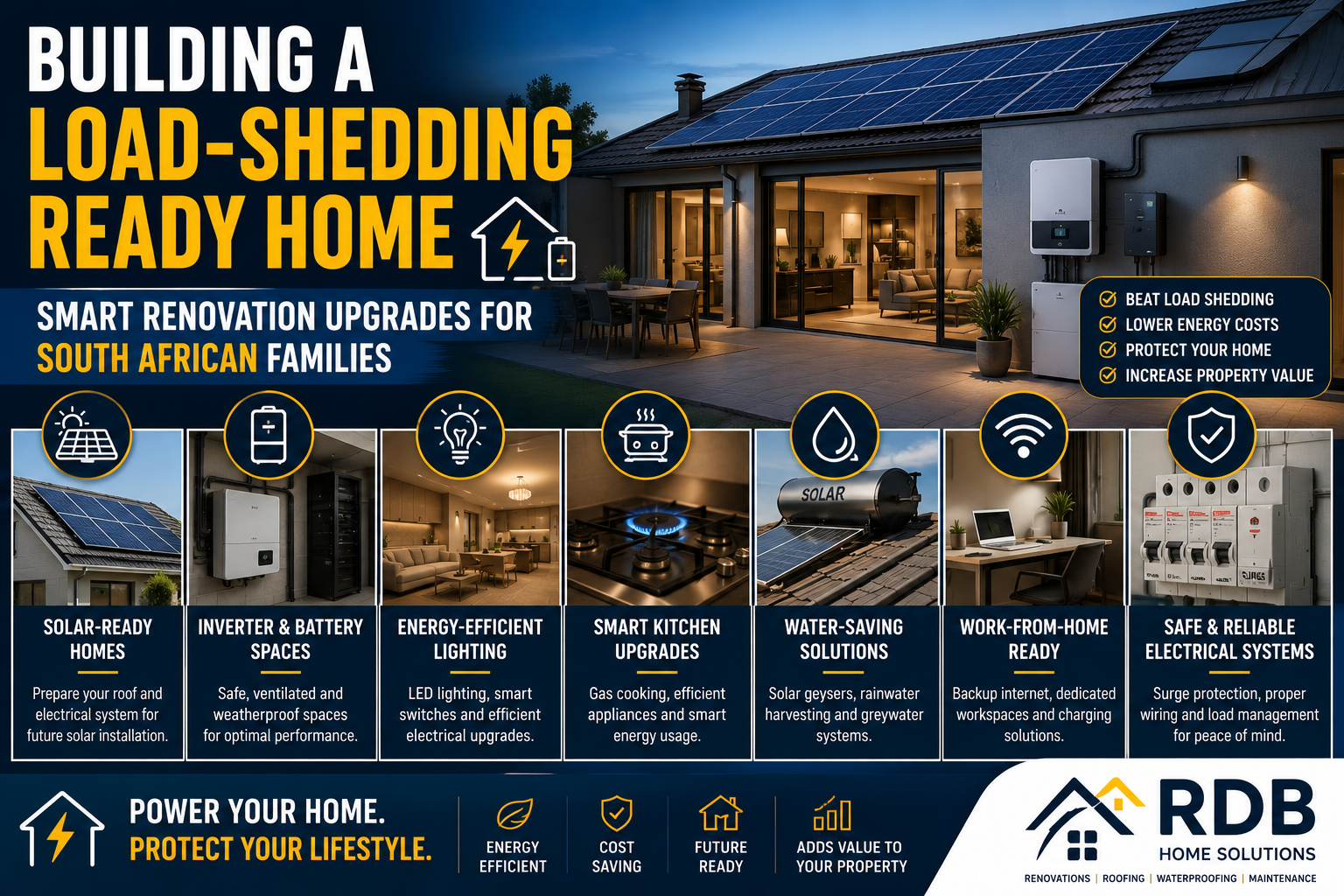
Building a Load-Shedding-Ready Home: Smart Renovation Upgrades for South African Families
Load shedding has fundamentally changed the way South Africans think about their homes. What was once considered a temporary inconvenience has now become a major factor influencing renovation decisions, property values, energy planning, and modern home design.
Across Somerset West, Strand, Gordon’s Bay, and the wider Helderberg region, homeowners are increasingly investing in practical upgrades that improve energy resilience, reduce electricity costs, and create more functional living environments during power outages.
Today’s renovations are no longer focused only on aesthetics. Modern homeowners now prioritise:
- Backup power readiness
- Energy efficiency
- Smart electrical planning
- Sustainable water usage
- Remote work functionality
- Long-term cost savings
Load shedding home upgrades have quickly become one of the most valuable categories of home improvement in South Africa.
Whether planning a full renovation or smaller strategic improvements, creating a load-shedding-ready home can significantly improve comfort, convenience, and long-term property value.
Why South African Homes Need to Be Load-Shedding Ready
Load shedding affects almost every aspect of modern daily life.
From interrupted work schedules to damaged electronics and rising energy costs, unreliable electricity supply has forced homeowners to rethink how their homes function.
Load shedding home upgrades help create properties that are:
- More resilient
- More energy-efficient
- More comfortable during outages
- Better prepared for future energy challenges
Rising Electricity Costs
Electricity prices continue increasing across South Africa, placing growing financial pressure on households.
Energy-efficient renovations can help reduce:
- Monthly utility costs
- Grid dependency
- Long-term energy expenses
Homeowners are increasingly seeking smarter ways to manage consumption without sacrificing comfort.
Remote Work and Connectivity Challenges
Many professionals now work remotely full-time or part-time.
Power outages can disrupt:
- Internet connectivity
- Video meetings
- Security systems
- Productivity
- Charging infrastructure
Modern homes must now support reliable work-from-home functionality even during extended outages.
Property Value Considerations
Properties equipped with energy-conscious features often attract stronger buyer interest.
Homes with:
- Solar compatibility
- Inverter systems
- Efficient electrical layouts
- Backup power infrastructure
…are increasingly viewed as more desirable in the South African property market.
Load shedding home upgrades can therefore improve both lifestyle practicality and resale appeal.
Solar-Ready Renovations That Future-Proof Homes
Many homeowners may not install full solar systems immediately, but preparing properties for future solar integration has become a smart long-term investment.
Modern renovations increasingly include solar-ready infrastructure during upgrade projects.
Roof Preparation for Solar Installation
Roof condition plays a critical role in solar readiness.
Before installing solar systems, homeowners should consider:
- Roof structural integrity
- Waterproofing
- Roofing lifespan
- Orientation and sun exposure
- Available roof space
Completing roofing repairs before solar installation helps avoid expensive future removal and reinstallation costs.
Electrical Planning and Solar Compatibility
Proper electrical planning allows homes to integrate solar systems more efficiently later.
This may include:
- Upgraded distribution boards
- Dedicated inverter circuits
- Battery-ready electrical layouts
- Surge protection systems
Load shedding home upgrades often begin with smart electrical planning rather than immediate large-scale installations.
Battery Storage Considerations
Battery systems require:
- Proper ventilation
- Temperature control
- Weather protection
- Safe installation areas
Planning these spaces during renovations creates a cleaner, safer, and more efficient setup.
Inverter and Battery Backup Spaces
One of the most overlooked aspects of energy renovations is proper inverter and battery placement.
Poorly planned installations can create:
- Overheating risks
- Moisture exposure
- Ventilation problems
- Maintenance difficulties
- Noise issues
Ventilation Requirements
Battery systems and inverters generate heat during operation.
Dedicated ventilation helps:
- Improve system efficiency
- Extend equipment lifespan
- Reduce overheating risks
Proper airflow is especially important in coastal environments where humidity levels are higher.
Weather Protection and Waterproofing
Coastal homes require additional protection against:
- Moisture intrusion
- Salt-heavy air
- Condensation
- Storm exposure
Waterproofing and proper enclosure design help protect expensive backup systems.
Noise Reduction
Certain inverter systems and battery cooling components generate operational noise.
Thoughtful placement and insulation help minimise disruption inside living areas.
Load shedding home upgrades should always balance technical functionality with everyday comfort.
Energy-Efficient Lighting and Electrical Upgrades
Lighting and electrical systems have become a major focus in modern renovations.
Small electrical improvements can significantly improve efficiency and reduce backup power demands.
LED Lighting Upgrades
LED lighting consumes far less energy than traditional lighting systems.
Benefits include:
- Lower electricity usage
- Reduced inverter load
- Longer lifespan
- Improved lighting quality
Modern LED systems also support:
- Smart controls
- Dimming features
- Automated schedules
Smart Switches and Automation
Smart home integration continues growing in popularity across modern South African homes.
Smart systems allow homeowners to:
- Control lighting remotely
- Monitor power usage
- Automate energy-saving functions
- Manage backup systems more effectively
Surge Protection
Load shedding often increases the risk of power surges when electricity supply returns.
Proper surge protection helps safeguard:
- Appliances
- TVs
- Computers
- Wi-Fi systems
- Smart home equipment
Electrical protection systems are one of the most valuable preventative load shedding home upgrades homeowners can install.
Smart Kitchen and Appliance Upgrades
Kitchens are among the most energy-intensive areas in any home.
Modern renovations increasingly focus on creating kitchens that remain practical during outages while reducing energy consumption overall.
Gas Cooking Solutions
Gas hobs and hybrid cooking systems remain highly popular in South Africa.
Benefits include:
- Cooking during outages
- Reduced electrical demand
- Faster heating performance
Many modern kitchens now combine electric ovens with gas cooking surfaces for greater flexibility.
Energy-Efficient Appliances
Modern appliances use significantly less electricity than older systems.
Popular upgrades include:
- Efficient refrigerators
- Inverter air conditioners
- Energy-saving dishwashers
- Smart washing machines
Load shedding home upgrades focused on appliance efficiency can reduce long-term energy costs substantially.
Appliance Protection Systems
Dedicated appliance protection systems help prevent:
- Electrical damage
- Sudden shutdown issues
- Power surge failures
This is particularly important for expensive modern appliances.
Water-Saving and Energy-Conscious Home Improvements
Sustainability continues becoming a major priority for South African homeowners.
Water and energy systems are increasingly being designed together to improve efficiency and resilience.
Solar Geysers and Efficient Water Heating
Water heating accounts for a large portion of household electricity consumption.
Popular upgrades include:
- Solar geysers
- Heat pumps
- Smart geyser timers
- Insulated piping
Reducing geyser energy demand significantly improves overall household efficiency.
Rainwater Harvesting Systems
Water security remains an important concern in the Western Cape.
Rainwater systems help support:
- Garden irrigation
- Toilet flushing
- Outdoor cleaning
- Backup water supply
Greywater Systems
Modern water-conscious homes increasingly incorporate greywater recycling systems to improve sustainability.
These systems help reduce:
- Municipal water usage
- Utility costs
- Environmental impact
Load shedding home upgrades increasingly overlap with broader sustainability-focused renovations.
Home Office and Connectivity Upgrades for Remote Work
Modern homes now require functional workspaces capable of operating during outages.
Dedicated Home Office Design
Effective home office spaces prioritise:
- Quiet environments
- Natural lighting
- Ventilation
- Ergonomic layouts
- Reliable connectivity
Remote work has become a major factor influencing renovation decisions.
Backup Internet Solutions
Reliable internet remains essential during load shedding.
Popular upgrades include:
- UPS systems for routers
- Fibre-friendly backup setups
- Dedicated charging stations
- Network battery systems
Charging and Device Management
Modern households require efficient charging infrastructure for:
- Laptops
- Phones
- Tablets
- Backup lighting
- Portable batteries
Smart electrical planning improves convenience and functionality significantly.
Why Quality Workmanship Matters in Electrical and Structural Renovations
Energy-focused renovations require far more than simply installing new equipment.
Poor workmanship can create:
- Safety risks
- Electrical faults
- Waterproofing failures
- Structural complications
- Compliance issues
Safety Compliance
Electrical upgrades must comply with South African regulations and safety standards.
Professional installation helps ensure:
- Correct wiring
- Safe load balancing
- Proper circuit protection
- Long-term reliability
Long-Term Durability
Cheap installations often fail prematurely, particularly in coastal environments exposed to:
- Moisture
- Salt air
- Temperature fluctuations
High-quality materials and workmanship significantly improve long-term system performance.
Proper Planning Matters
Load shedding home upgrades work best when integrated into broader renovation planning.
Professional contractors help ensure:
- Efficient layouts
- Future scalability
- Proper ventilation
- Waterproof protection
- Structural compatibility
How RDB Home Solutions Helps Homeowners Create Smarter, More Resilient Homes
RDB Home Solutions provides practical renovation and improvement services designed for the realities of modern South African living.
Their services include:
- Roofing repairs
- Waterproofing
- Structural upgrades
- Property maintenance
- Home improvement projects
- Energy-conscious renovations
With experience working throughout Somerset West, Strand, Gordon’s Bay, and the wider Helderberg region, the company understands the challenges homeowners face regarding:
- Coastal weather conditions
- Load shedding
- Property maintenance
- Long-term durability
Their approach focuses on:
- Reliable workmanship
- Practical solutions
- Long-term value
- Functional design
- Quality materials
Whether preparing a property for solar integration or improving overall household efficiency, professional renovation planning can significantly improve both comfort and resilience.
Smarter Homes Are the Future of South African Living
Load shedding has permanently changed how South Africans design, renovate, and manage their homes.
Modern homeowners increasingly prioritise:
- Energy resilience
- Smart electrical systems
- Sustainability
- Backup infrastructure
- Long-term efficiency
Load shedding home upgrades are no longer optional luxury additions. They have become essential investments in comfort, functionality, and future property value.
From solar-ready infrastructure and inverter spaces to energy-efficient kitchens and remote work upgrades, strategic renovations can dramatically improve how homes perform during ongoing energy challenges.
For homeowners in Somerset West and the Helderberg region, creating smarter, more resilient homes is quickly becoming one of the most valuable long-term renovation decisions possible.
Frequently Asked Questions
What are the most important load shedding home upgrades?
Solar-ready electrical systems, inverter setups, LED lighting, surge protection, and energy-efficient appliances are among the most valuable upgrades.
Do load shedding upgrades increase property value?
Yes. Homes with backup power readiness and energy-efficient features are increasingly attractive to buyers and tenants.
Why is proper inverter installation important?
Incorrect installation can lead to overheating, moisture damage, poor ventilation, and reduced equipment lifespan.
Are solar-ready renovations worth it if I do not install solar immediately?
Yes. Preparing your home for future solar integration reduces future installation costs and improves long-term flexibility.
What energy-efficient upgrades reduce electricity costs the most?
LED lighting, efficient appliances, smart geyser systems, insulation improvements, and solar water heating typically provide strong long-term savings.