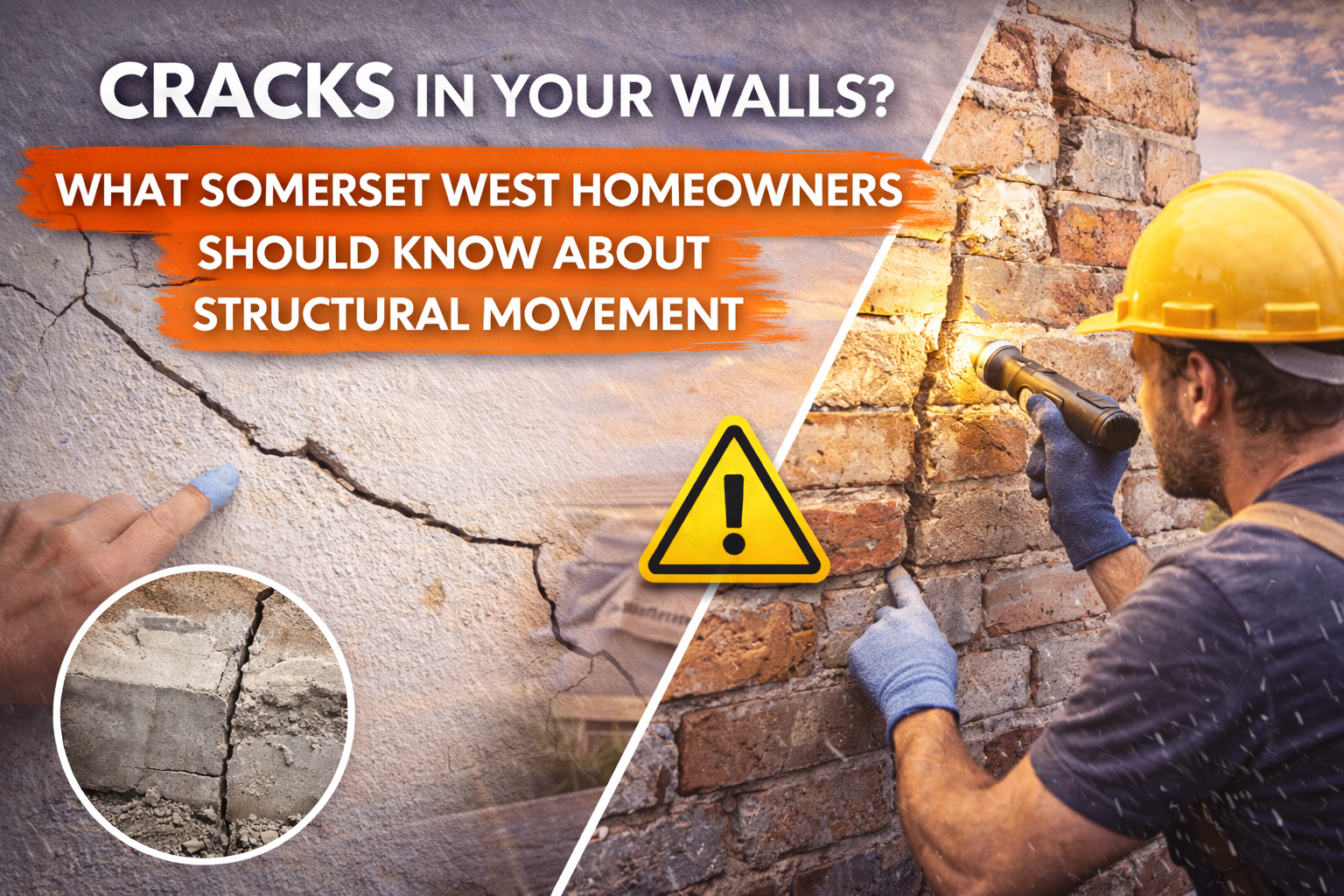
Cracks in Your Walls? What Somerset West Homeowners Should Know About Structural Movement
Many homeowners in Somerset West, Stellenbosch, Grabouw and the wider Helderberg region eventually notice cracks appearing in their walls or ceilings. While small cracks are often harmless and part of normal building settlement, some cracks can indicate deeper structural issues that should not be ignored.
The coastal environment of the Helderberg, combined with ageing building materials and seasonal weather changes, can cause gradual movement in residential structures. Over time, this movement may lead to visible cracks in plaster, ceilings or masonry.
Understanding why cracks appear, which types are harmless, and when they may signal structural problems can help homeowners protect their properties and prevent more serious damage.
Why Cracks Appear in Homes in Somerset West
Cracks in walls are fairly common in residential buildings, particularly in homes that are several decades old.
Several factors can contribute to structural movement.
Natural Settlement
When a home is first built, the structure gradually settles into the soil beneath it. This process can take several years and may cause minor cracks in plaster or ceilings.
These cracks are usually small and cosmetic.
Coastal Climate and Temperature Changes
The Helderberg region experiences seasonal temperature changes and strong coastal winds. These environmental factors can cause building materials to expand and contract over time.
Repeated expansion and contraction may eventually create cracks in plaster or masonry.
Soil Movement
Certain soil types expand when wet and shrink during dry periods. This movement can place pressure on foundations and walls, leading to structural cracks.
Ageing Construction Materials
Older homes may develop cracks as plaster, mortar and structural components deteriorate over time.
Homes built decades ago often require renovation or structural repairs to maintain their integrity.
Homeowners experiencing multiple structural issues may also want to review 10 Signs Your Home in Somerset West Needs a Renovation.
Types of Cracks Homeowners Should Watch For
Not all cracks are cause for concern. Understanding the different types can help determine whether repairs are necessary.
Hairline Plaster Cracks
Hairline cracks are extremely thin cracks that appear in plaster surfaces. These are often caused by normal settlement or slight movement in building materials.
They are typically cosmetic and easy to repair.
Vertical Cracks
Vertical cracks in walls are often less serious than other crack patterns. They may occur due to natural settling or minor structural movement.
However, they should still be monitored over time.
Diagonal Cracks Near Windows and Doors
Diagonal cracks that extend from the corners of windows or doors may indicate structural movement.
These cracks often appear when foundation movement places stress on wall openings.
Ceiling Cracks
Cracks in ceilings may occur due to movement in roof structures or shifts in the building frame.
While some ceiling cracks are cosmetic, large cracks should be inspected.
Foundation Cracks
Cracks in foundations or exterior walls may signal more serious structural issues.
If these cracks grow over time or allow water penetration, professional assessment is recommended.
When Cracks May Indicate Structural Problems
Certain warning signs suggest that cracks may be more than just cosmetic.
Homeowners should consider professional inspection if cracks:
- continue to grow over time
- appear suddenly after heavy rain or structural work
- occur alongside doors or windows that no longer close properly
- appear in combination with sagging floors or ceilings
These symptoms may indicate structural movement that requires repair.
Ignoring structural cracks can allow problems to worsen over time.
The Link Between Cracks and Water Damage
Cracks in exterior walls can allow moisture to enter the structure of a home.
When rainwater penetrates cracks in plaster or masonry, it can lead to:
- damp interior walls
- peeling paint
- mould growth
- deterioration of plaster and timber structures
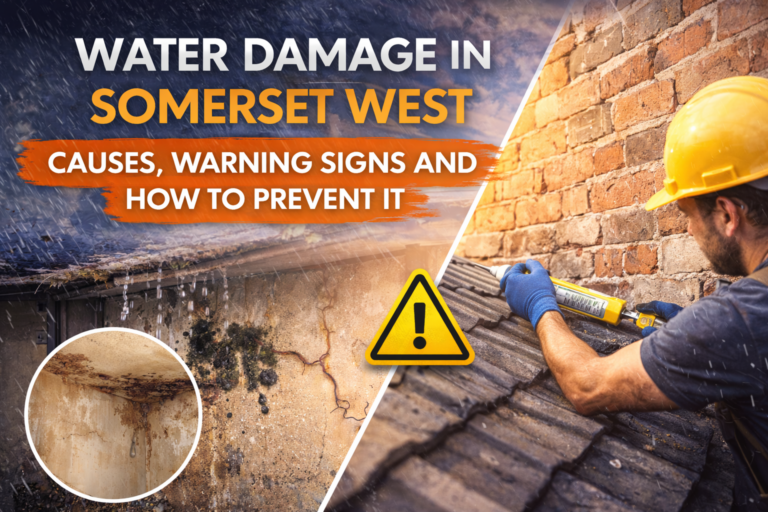
Homeowners experiencing moisture problems should also read Water Damage in Somerset West Homes: Causes, Warning Signs and How to Prevent It.
Addressing cracks early helps prevent moisture from entering the building.
Professional waterproofing services in the Helderberg can also protect walls and structures from further damage.
How Contractors Repair Structural Cracks
Professional contractors use several methods to repair structural cracks depending on their severity and underlying cause.
Plaster Repairs
For cosmetic cracks, damaged plaster can be repaired and reinforced before repainting.
Crack Stitching
For more serious structural cracks, contractors may use crack stitching techniques to reinforce the affected wall.
Structural Reinforcement
In cases where foundation movement is involved, structural reinforcement may be necessary to stabilise the building.
Waterproofing Protection
Once cracks are repaired, waterproofing coatings can help prevent future moisture penetration.
A professional inspection helps determine the most appropriate repair method.
Preventing Structural Cracks in Your Home
While some structural movement is unavoidable, regular maintenance can reduce the risk of serious cracks.
Monitor Cracks Over Time
Homeowners should monitor existing cracks to see whether they expand or change shape.
Maintain Proper Drainage
Poor drainage around the home can increase soil movement and foundation stress.
Ensuring proper water runoff helps protect the foundation.
Address Water Damage Quickly
Moisture can weaken building materials and accelerate cracking.
Promptly repairing leaks or damp problems helps prevent further structural issues.
Schedule Professional Inspections
Professional contractors can identify early signs of structural problems before they worsen.
Frequently Asked Questions About Cracks in Walls
Are cracks in walls always a structural problem?
No. Many cracks are cosmetic and caused by normal settlement or plaster movement. However, large or expanding cracks may require professional assessment.
What type of cracks should homeowners worry about?
Diagonal cracks near windows, large cracks in foundations or cracks that continue growing over time may indicate structural movement.
Can cracks allow water into the house?
Yes. Cracks in exterior walls can allow rainwater to enter, leading to damp walls, mould growth and interior damage.
How are structural cracks repaired?
Depending on the severity, repairs may include plaster restoration, crack stitching, structural reinforcement or waterproofing treatments.
When should I call a contractor?
If cracks continue growing, appear suddenly or are accompanied by moisture problems, professional inspection is recommended.
Protecting Your Somerset West Home from Structural Damage
Cracks in walls are a common occurrence in homes across Somerset West and the Helderberg, particularly in older properties.
While many cracks are cosmetic, some may indicate deeper structural issues that require attention.
By recognising the warning signs early and addressing structural problems promptly, homeowners can protect their properties from long-term damage.
RDB Home Solutions provides expert renovation, waterproofing and structural repair services throughout Somerset West, Stellenbosch, Grabouw and the greater Helderberg, helping homeowners maintain safe and durable homes.