Retaining Wall Problems in Somerset West Homes: Warning Signs and Repair Solutions
Many homes in Somerset West, Stellenbosch, Grabouw and the wider Helderberg region are built on sloped terrain or hillside properties. While these locations offer beautiful views of the mountains and coastline, they also present unique structural challenges for homeowners.
One of the most important structural elements in hillside construction is the retaining wall. Retaining walls hold back soil, stabilise slopes and protect buildings from erosion or ground movement. When these structures fail or deteriorate, they can lead to serious structural problems affecting the surrounding property.
Understanding how retaining walls work, recognising early warning signs of failure and addressing drainage issues quickly can help homeowners prevent costly structural damage.
What Retaining Walls Do and Why They Matter
Retaining walls are designed to support soil on sloped land and prevent it from shifting or collapsing. These structures are commonly used in hillside residential developments across the Helderberg.
Retaining walls serve several critical purposes:
- stabilising slopes and preventing landslides
- protecting building foundations
- preventing soil erosion during heavy rain
- supporting landscaping and terraced gardens
- directing water away from structures
Without properly constructed retaining walls, soil pressure and water buildup can cause ground movement that may damage nearby buildings.
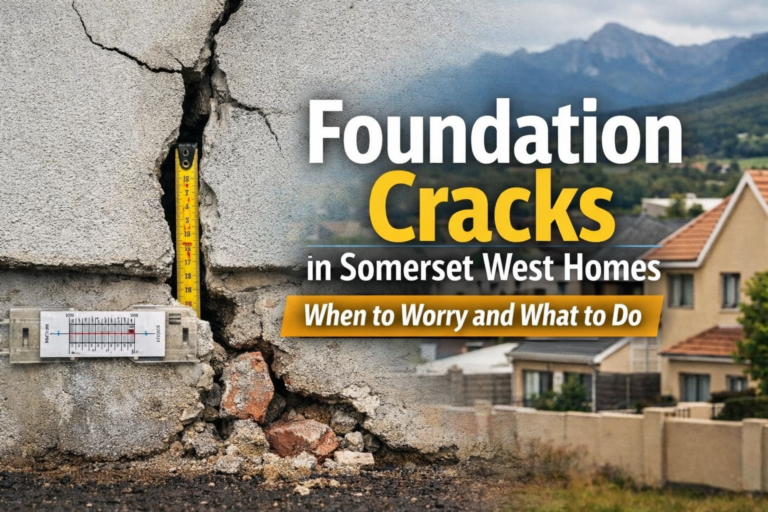
Homeowners concerned about structural movement may also want to read Foundation Cracks in Somerset West Homes: When to Worry and What to Do.
Common Causes of Retaining Wall Failure
Several factors can contribute to the deterioration or failure of retaining walls.
Poor Drainage
Water accumulation behind a retaining wall is one of the most common causes of structural failure. Without proper drainage systems, water pressure builds up in the soil and pushes against the wall.
This pressure can eventually cause the wall to crack, lean or collapse.
Drainage issues around the property can also contribute to moisture-related damage. Homeowners should review Blocked Gutters and Drainage Problems: A Hidden Cause of Water Damage in Somerset West Homes.
Soil Pressure
The weight of soil behind a retaining wall exerts constant pressure on the structure. Over time, this pressure can weaken poorly constructed or ageing walls.
Poor Construction
Retaining walls that were not properly engineered or reinforced during construction may fail prematurely.
Inadequate foundations, insufficient reinforcement or improper drainage design can all contribute to structural instability.
Ageing Materials
Older retaining walls may deteriorate as construction materials weaken over time.
Concrete may crack, mortar joints may erode and steel reinforcement may corrode.
Water Accumulation During Heavy Rain
Somerset West experiences winter rainfall, which can saturate soil and increase pressure behind retaining walls.
If drainage systems are inadequate, this excess water can destabilise the structure.
Warning Signs of Retaining Wall Problems
Retaining wall damage often develops gradually. Recognising early warning signs can help homeowners address problems before they escalate.
Leaning Walls
A retaining wall that begins leaning outward may indicate increasing soil pressure behind the structure.
Cracks in the Wall
Cracks in concrete or masonry retaining walls may signal structural stress or movement.
Bulging Sections
Bulging areas in the wall surface may indicate that soil pressure is pushing the wall outward.
Soil Erosion Around the Wall
Erosion or soil movement around the base of the wall may weaken its stability.
Water Pooling Behind the Wall
Standing water behind the retaining wall indicates poor drainage and increases pressure on the structure.
Excess moisture can also contribute to structural damage in nearby buildings. Homeowners experiencing damp problems may want to read Water Damage in Somerset West Homes: Causes, Warning Signs and How to Prevent It.
How Retaining Walls Are Repaired or Reinforced
Repairing a retaining wall requires identifying the cause of the failure and implementing appropriate structural solutions.
Drainage Improvements
Installing proper drainage systems behind retaining walls reduces water pressure and prevents soil saturation.
Structural Reinforcement
Walls that are beginning to weaken may be reinforced with additional supports, anchors or structural reinforcement.
Crack Repairs
Small cracks can sometimes be sealed or reinforced before they expand into larger structural failures.
Wall Reconstruction
In severe cases, sections of the retaining wall may need to be rebuilt to ensure structural stability.
Professional contractors can evaluate the condition of the retaining wall and recommend the most appropriate solution.
Homeowners considering structural improvements may benefit from comprehensive home renovation and construction services in Somerset West, Stellenbosch and Grabouw.
Preventing Retaining Wall Failure
Preventative maintenance and proper drainage management are essential for protecting retaining walls.
Ensure Proper Drainage
Drainage systems behind retaining walls should allow water to escape rather than accumulate.
Maintain Landscaping
Plants and landscaping features should not obstruct drainage outlets.
Inspect Retaining Walls Regularly
Homeowners should periodically inspect retaining walls for signs of leaning, cracking or erosion.
Address Minor Damage Early
Small cracks or drainage problems should be repaired promptly to prevent structural deterioration.
Schedule Professional Inspections
Structural inspections help identify potential issues before they become serious problems.
Frequently Asked Questions About Retaining Wall Problems
What causes retaining walls to fail?
Retaining wall failure is often caused by poor drainage, soil pressure, poor construction or ageing materials.
How can I tell if my retaining wall is failing?
Signs include leaning walls, cracks, bulging sections, soil erosion and water pooling behind the wall.
Can drainage problems damage retaining walls?
Yes. Water buildup behind the wall increases soil pressure and is one of the most common causes of retaining wall failure.
Are cracked retaining walls dangerous?
Small cracks may be harmless, but larger cracks or structural movement should be inspected by a professional.
When should I call a contractor about a retaining wall?
If the wall begins leaning, bulging or cracking significantly, professional inspection is recommended.
Protecting Your Somerset West Property from Structural Damage
Retaining walls play a crucial role in stabilising hillside properties throughout Somerset West and the Helderberg.
When properly constructed and maintained, these structures help protect homes from soil movement, erosion and structural damage.
However, retaining walls that develop drainage problems or structural weaknesses can eventually threaten the stability of nearby buildings.
By recognising early warning signs and addressing drainage and structural issues promptly, homeowners can protect their property and maintain the long-term safety of their homes.
RDB Home Solutions provides professional construction, structural repair and renovation services across Somerset West, Stellenbosch, Grabouw and the wider Helderberg, helping homeowners maintain safe and durable properties.